NFC tags and QR codes do the same basic job: they take a customer from the physical world to a web page in seconds. For a local business that wants more Google reviews, either one can make the difference between a customer who means to leave a review and one who actually does. But they work differently, and each has strengths.
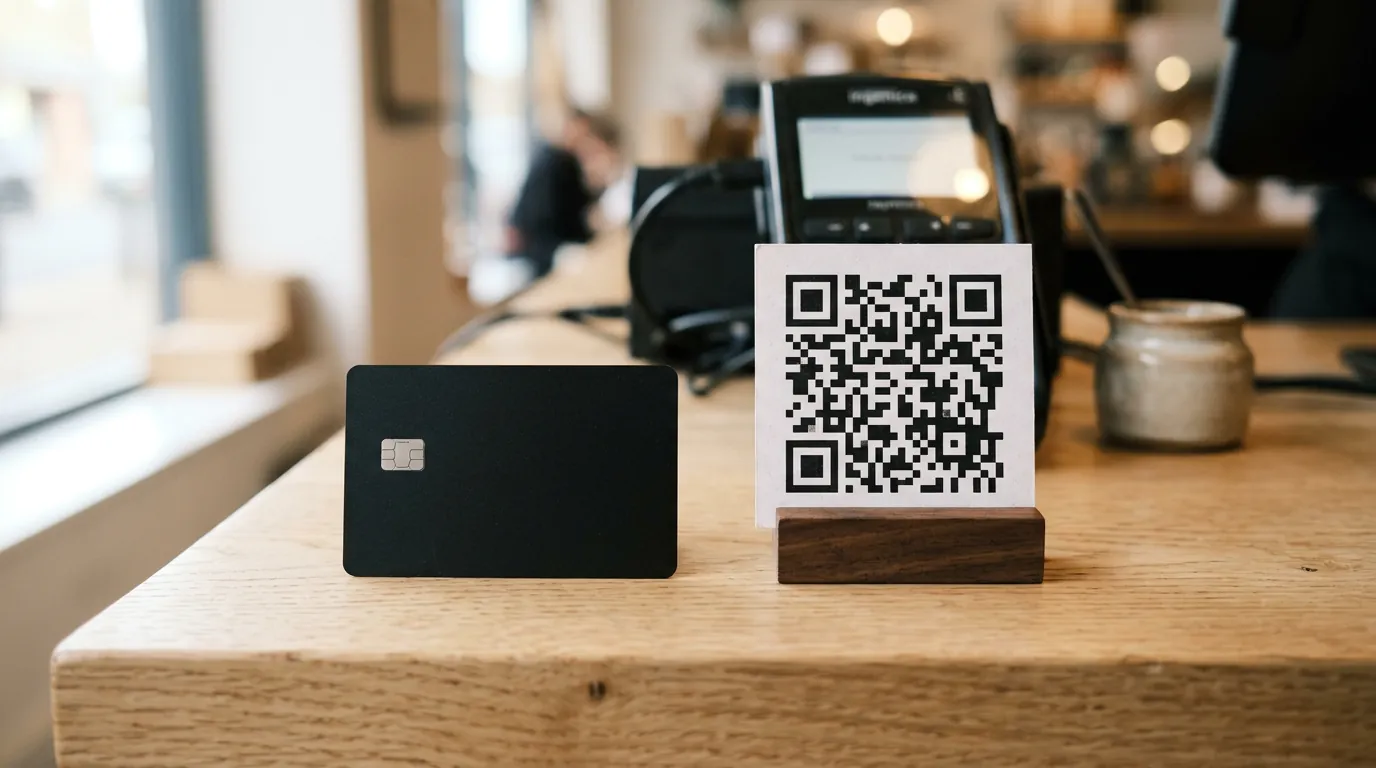
NFC is faster and feels more modern, because customers simply tap. QR codes are cheaper and work on almost every phone with a camera. For collecting reviews, the best approach is to combine them: an NFC card with a QR code printed on it, so every customer has an easy option.
- NFC is quicker for most customers: one tap opens the link with no camera or app.
- QR codes work on almost any smartphone with a camera and cost nothing to print.
- Both can be misused, so lock NFC tags after programming and only display QR codes you control.
- For review collection, the best option is usually both: an NFC card with a printed QR code.
In this article
How each one works
QR codes are printed patterns that store a web address. The customer opens their camera, points it at the code and taps the link that appears.
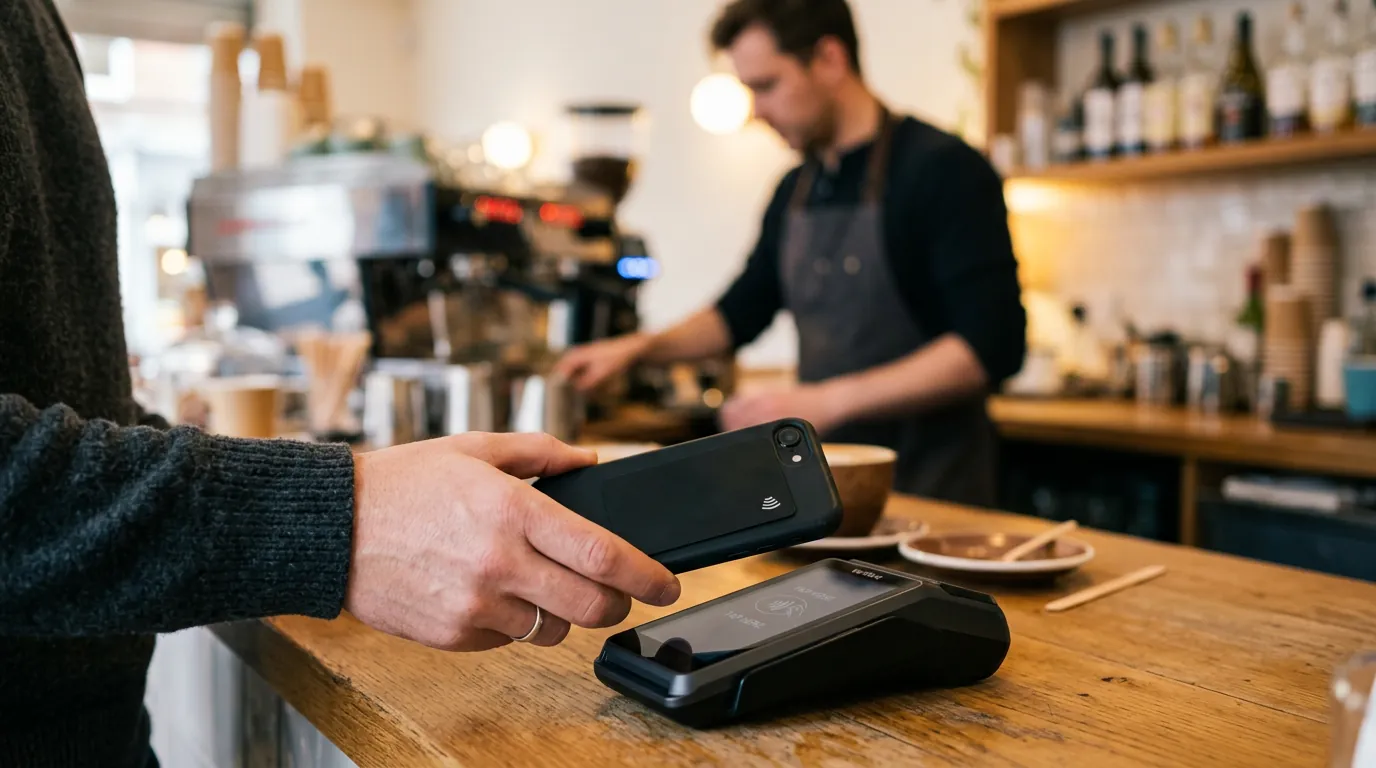
NFC tags contain a tiny chip that stores a web address. The customer holds their phone near the tag and the link opens automatically. NFC uses the same short range technology as contactless payments, and the tag draws its power from the phone, so it never needs a battery.
NFC vs QR at a glance
| NFC tag | QR code | |
|---|---|---|
| Speed | One tap | Open camera, frame, tap link |
| Phone support | iPhone XS and newer, most modern Android phones | Almost any smartphone with a camera |
| Cost | A small cost per card or tag | Free to generate and print |
| Works in low light | Yes | Can struggle |
| Durability | Sealed chip lasts for years | Can fade, scratch or get damaged |
| Distance | A few centimetres | Can be scanned from across a room |
| Best for | Counters, tables and handing to customers | Posters, receipts, windows and print |
Phone compatibility
Apple introduced background NFC tag reading with the iPhone XS and XR, which means iPhones from 2018 onwards can read a tag without opening an app. Most modern Android phones read NFC tags as well, although some people need to switch NFC on in their settings. Almost every smartphone camera can read QR codes. That is why a QR code on the back of an NFC card is such a sensible backup.
We set up simple review systems, from review links and QR codes to NFC cards, as part of every local SEO plan.
Security: what to watch for
Both technologies only store a link, so the risk lies in where that link goes.
- QR code tampering: criminals sometimes stick fake QR codes over genuine ones, particularly in car parks and public spaces. Only display codes on materials you control, and check them regularly.
- NFC tag rewriting: an unlocked NFC tag can be reprogrammed by someone with the right app. Always lock tags after programming, or buy cards that come locked.
- Use your own redirect: pointing both to a short address on your own website, which then forwards to Google, lets you change the destination quickly if anything goes wrong.
Which is best for collecting Google reviews?
For in person requests, NFC usually wins. The tap is quick, it works in dim lighting, and it feels effortless for the customer. For anything printed or viewed from a distance, such as receipts, windows, posters and flyers, QR codes are the better fit.
Google itself suggests sharing your review link or QR code on receipts, in thank you emails and in your premises. Our guide to finding your Google review link shows you how to generate both.
In busy markets such as Glasgow, Leeds and Plymouth, the businesses in the top three of the map pack almost always have more recent reviews than the ones below them. Asking consistently is what gets you there. You can find every city we cover on our SEO locations page.
The best of both
Most of the businesses we work with use a combination: an NFC review card with a QR code on it at the counter, and QR codes on invoices and signs. Every customer gets an option that works for their phone, and you collect reviews from every channel.
Offer it to every customer, never pressure people to review while they are with you and never offer incentives. Google treats incentivised and selectively requested reviews as fake engagement.
For more on the benefits of tap cards, read the benefits of Google review NFC cards.
Frequently asked questions
Is NFC better than a QR code?
NFC is quicker for most customers because it only needs a tap, while QR codes work on almost every phone with a camera. For reviews, using both together gives every customer an easy option.
Do all phones support NFC?
Most modern smartphones do. iPhones from the XS and XR onwards read NFC tags in the background, and most recent Android phones support NFC, although it may need switching on in settings.
Can NFC tags be hacked?
An unlocked NFC tag can be reprogrammed, so tags should always be locked after programming. A locked tag cannot be changed.
Are QR codes free?
Yes. Google lets you download a free QR code for your review link from your Business Profile on a computer, and many free generators exist for other links.